HMEP · Haina Mill Earth Products · Honoka'a, Hawai'i
The Resurrection of
the Hamakua Coast
The Return of the Soil
1.9 Million Cubic Yards · 50 Acres · 80 Years in the Making
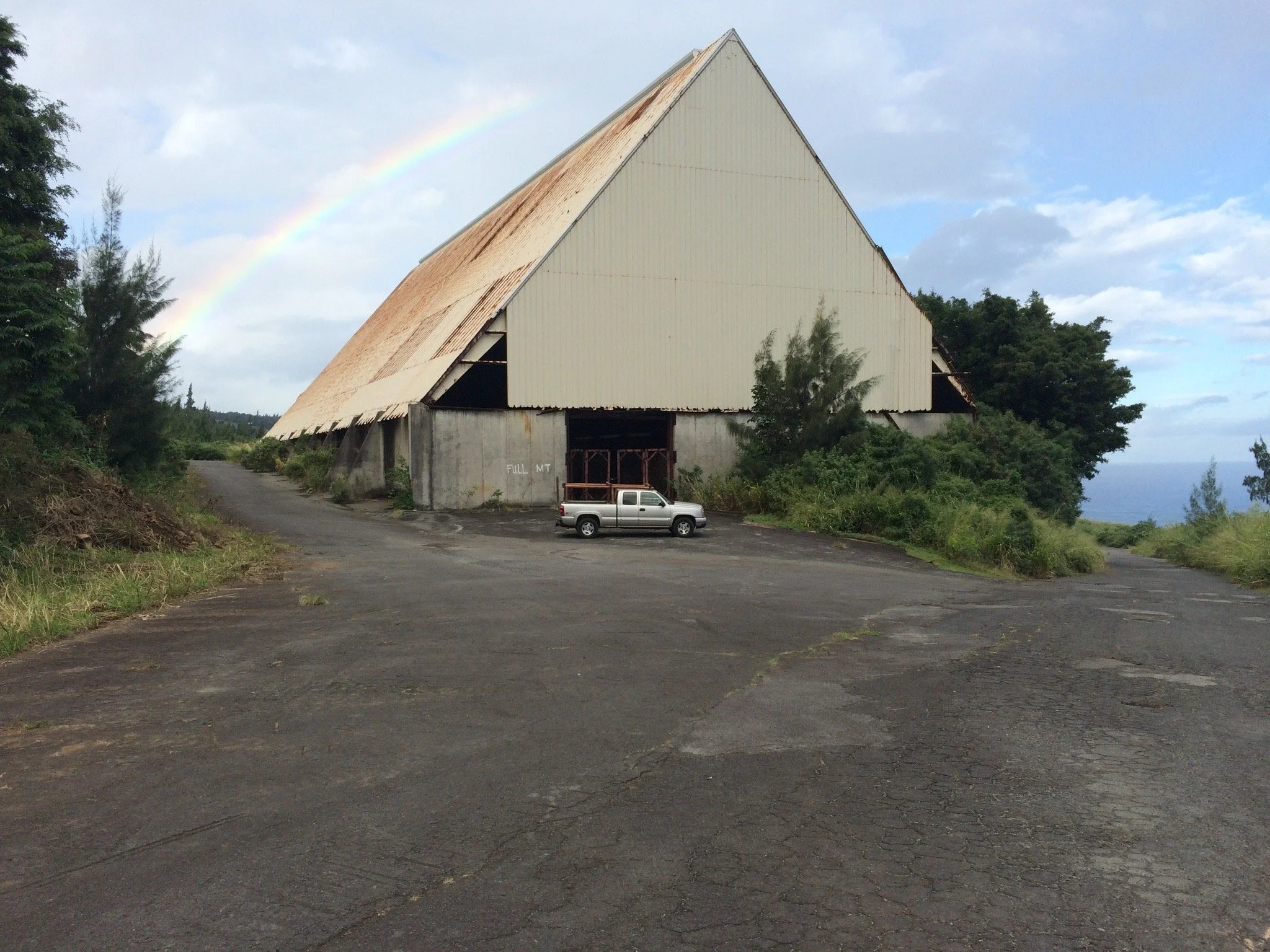
The Haina Mill A-frame · third largest structure in the state of Hawai'i · Honoka'a
Helicopter approach from the ocean · 3D animation · Bobby Grimes · HMEP · 2016
The Hamakua Coast · 1850–1994
For over 140 years, the sugarcane industry fed itself from the Hamakua Coast — and took everything with it when it left. Not just the cane. The topsoil. Millions upon millions of yards of it, ripped from the land by massive steam shovels during harvest, washed off the cane roots at the mill, and deposited — layer upon layer, decade upon decade — into the valley below the Haina mill.
The topsoil is everything. It is the thin living layer where food grows, where the atmosphere meets the earth, where oxygen levels run high enough to support the breathing of the soil food web. Where carbon cycles. Where water is held. Where fertility lives. Strip it away and you are left with subsoil — rocky, infertile, erosion-prone, dead.
The sugar industry did not know what it was doing, and would not have cared if it did. What left the coast as waste arrived in the valley as treasure — eighty years of topsoil, cane bagasse, and mill byproduct, self-organizing in the dark into something extraordinary. The largest compost pile in the world.
The soul of the earth is the topsoil. It was stolen from this coast — and it is all still here, waiting to come home.
Bobby Grimes · HMEP · President & CEOThe Numbers
of Bagasse & Topsoil
Industrial Site
Throughput · 1914–1994
Bagasse Valley
Temperature · Still Active
October 1, 1994
October 1, 1994 · The Last Day
On the first day of October 1994, the communities of the Hamakua Coast gathered for the Aloha Parade — hauling in the final harvest of sugarcane to be processed at the Haina mill. Seven hundred people lost their jobs that day. In one day. The plantation lifestyle that had defined this coast for generations simply ended.
The younger generations left. The remaining residents — aging, resilient, ethnically diverse — watched the great mill fall silent. The buildings began to weather. Weeds pushed through every crack in the concrete. The valley below, filled with eighty years of the coast's own stolen soil, sat undisturbed. Still composting. Still alive. Still waiting.
The last cane came in. Seven hundred people walked out. The Hamakua Coast's great mill fell silent — and the valley below kept breathing on its own.
The Discovery · What Was Left Behind
Years after the mill closed, a rumor circulated among the old timers — that something remarkable had been accumulating in the valley below Honoka'a. When the ground was finally opened and tested, what they found was unlike anything the geotechnical engineers had encountered. Twelve excavations. Core temperatures between 125 and 151 degrees Fahrenheit throughout — the heat of active microbial life, carbon compounds breaking down, the pile still feeding itself on the sugar that had soaked into it over eight decades.
Bobby was the first person called. He arrived, he assessed, and he understood immediately what he was looking at — not waste, not a liability, but the most concentrated deposit of living organic matter on the face of the planet. The largest compost pile in the world.
He hired an environmental engineer, a geologist, and a surveyor. The University of Hawai'i at Hilo College of Agriculture ran trials — growing corn in the material, testing for arsenic from the old cane production. The arsenic was bound up by the iron content of the soils, well under federal USDA guidelines. The material was rich, dark, fertile, and odorless. Ready. Waiting to go back where it came from.
"If you left Bobby on a deserted island alone, you'd come back a few years later and find that he built a whole amusement park somehow."
— Kenta Nemoto · Hawaii Agriculture Academy · 2015
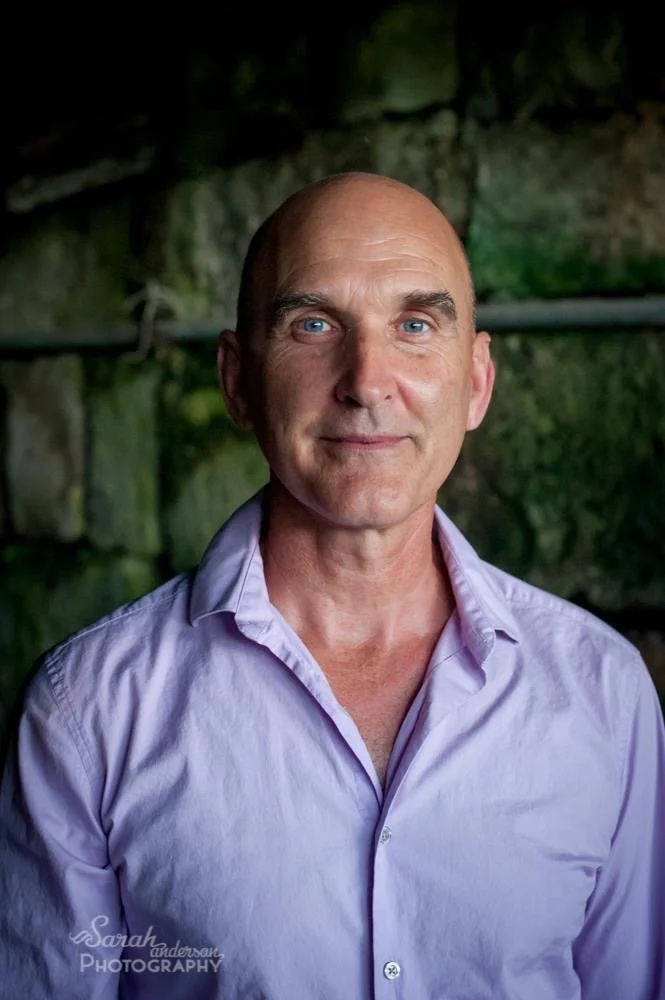
Bobby Grimes · inside the tunnel beneath the Haina Mill · cut stone walls, moss, darkness · Hamakua Coast · Photography by Sarah Anderson · sarahandersonhawaii.com
The A-Frame · Third Largest Structure in the State
Standing inside the great A-frame warehouse at the Haina mill site, 250 feet long, 110 feet wide, 100 feet to the ridge — Bobby looked like an ant against the structure. He turned to his visitors and shouted across the empty space:
"ISN'T IT JUST MASSIVE!? YOU CAN FLY TWO HELICOPTERS IN HERE AT THE SAME TIME!"
Bobby Grimes · inside the Haina Mill A-Frame · Honoka'a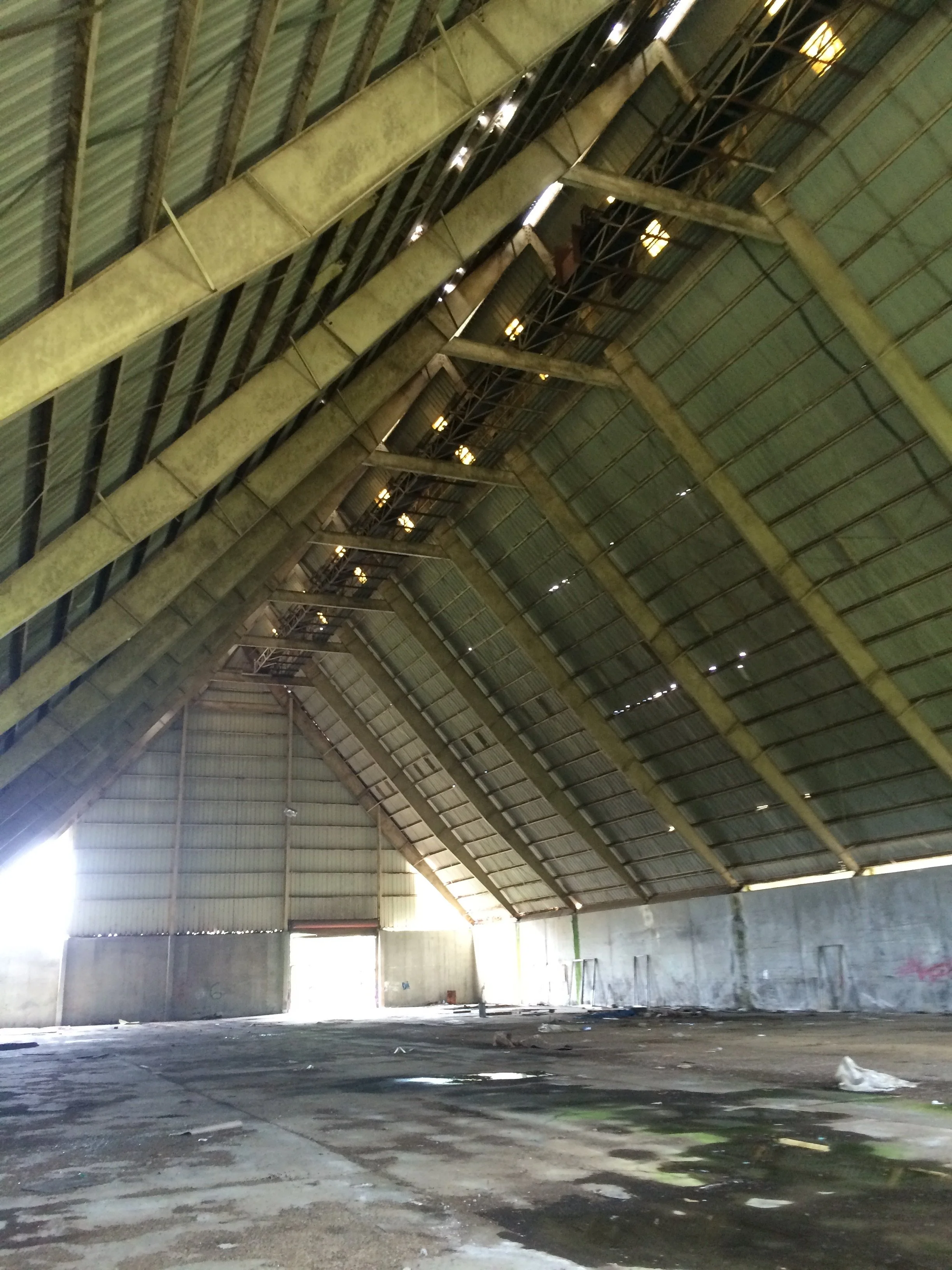
Inside the A-frame · 250' long · 110' wide · 100' to the ridge · cathedral scale
The third largest standing structure in the state of Hawai'i sits directly above the compost pile. It was always meant to be the processing facility — the place where the material would be sifted, sorted, finished, and bagged under the HMEP label. The roof alone covers more than half an acre. The potential for solar energy production on that single surface could power the entire operation and feed back into the Hawai'i Island grid.
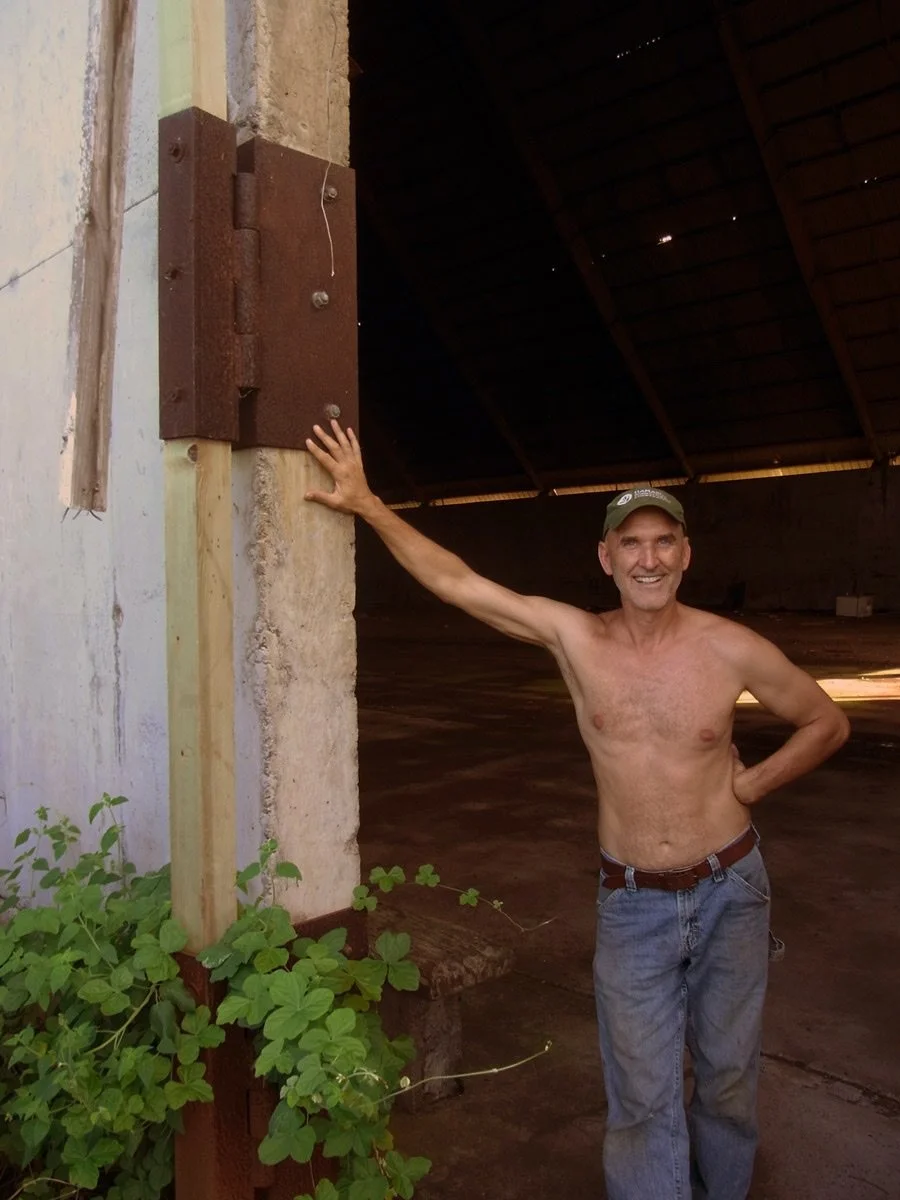
Bobby Grimes · inside the Haina Mill warehouse · HMEP cap · Honoka'a
The Resurrection · A Biodynamic Vision
A biodynamic practitioner understands resurrection differently than most. It is not metaphor — it is process. You take materials that are dead: no life force, no growth, no reproduction. You bring them together in the right ratios, with water, air, and temperature. And something begins. The pile self-organizes. Temperatures rise. Microbial communities establish themselves. Humic acids form. Carbon cycles. The soil food web awakens.
What the sugar industry spent 80 years destroying — the living topsoil of the Hamakua Coast — has been quietly resurrecting itself in that valley without anyone's help. All Bobby ever proposed to do was finish the job. Excavate it. Process it. Bag it. And send it back out onto the coast it was taken from.
The soil always comes home.
University of Hawai'i soil scientist Dr. Norman Arancon has stated that it is possible for Hawai'i to produce 100% of its own fertilizer. This site is where that begins.
HMEP · Haina Mill Earth Products · Bobby Grimes, President & CEOThe Vision · An Agricultural & Energy Park
HMEP was never only about compost. It was always about what happens when you treat a wound at its source — when you restore not just the soil but the economy, the community, and the energy independence of an entire coastline.
HMEP-labeled bagged compost returning Hamakua topsoil to Hamakua farms — and to the world.
Industrial-scale worm composting. Food waste intercepted from the waste stream. Vermicompost worth $4,000 per ton.
The A-frame roof alone — over 0.6 acres — feeding clean energy back into the Hawai'i Island grid.
Excavated rock returned to Hamakua farmers for access roads — material whose transport alone costs more than the rock itself.
Living soil biology brewed and delivered to the dry Kohala Coast — getting the luxury estates off synthetic chemicals and back to the ocean-safe fertility cycle.
Soil testing laboratory, educational facility, technology incubator. A living classroom for the next generation of Hawai'i farmers.
The Site Today · The Vision Tomorrow
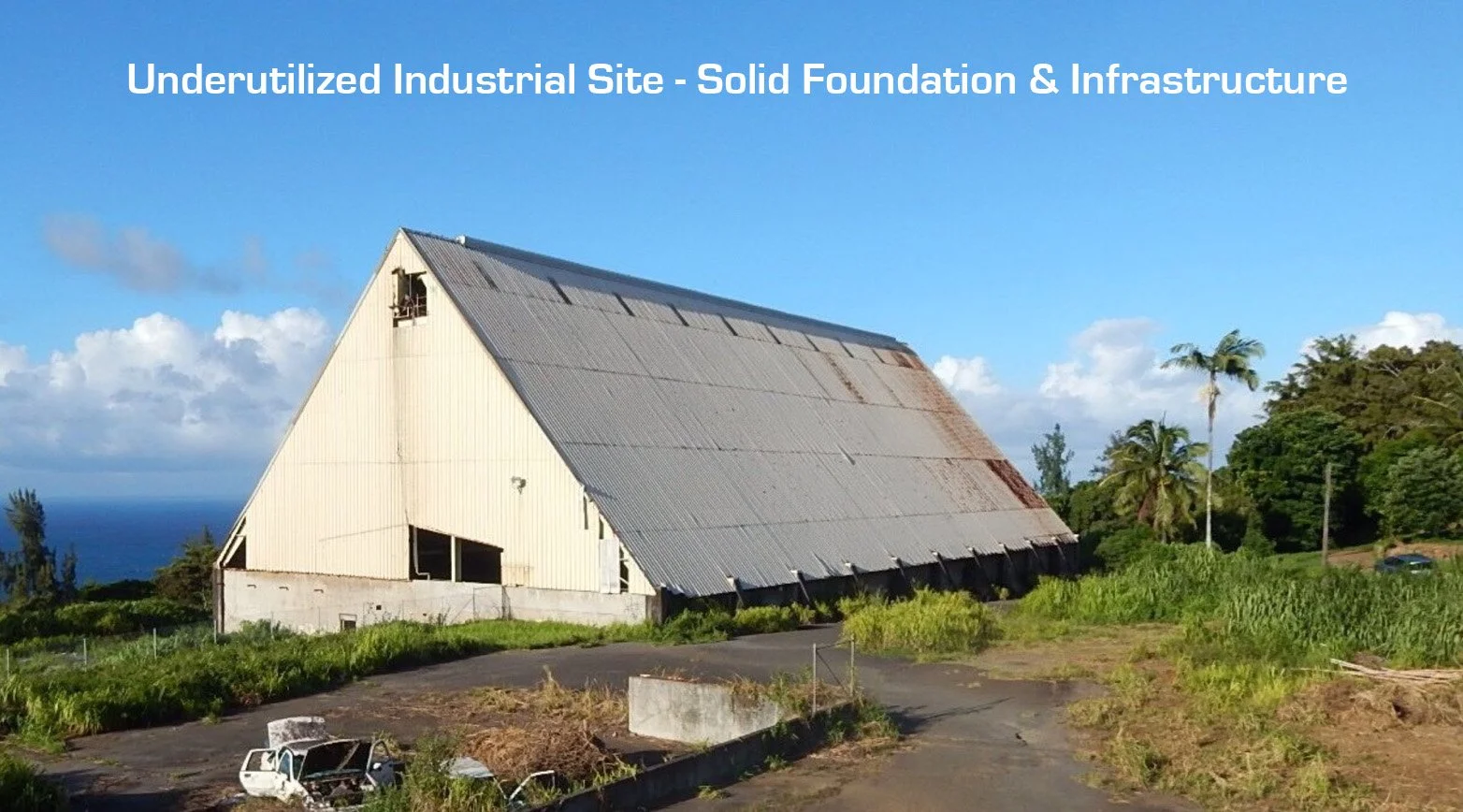
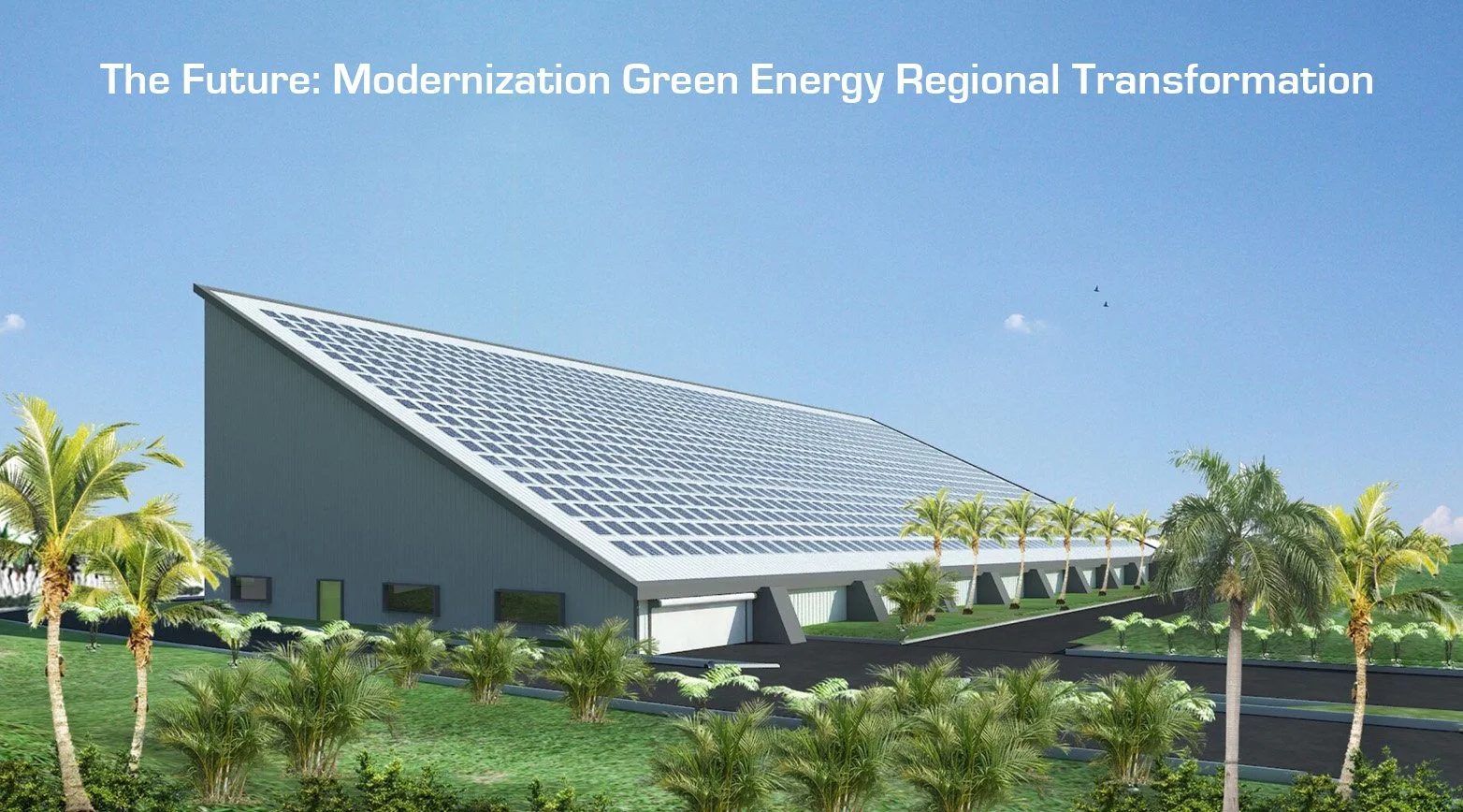
The A-frame today · and the vision · Modernization · Green Energy · Regional Transformation
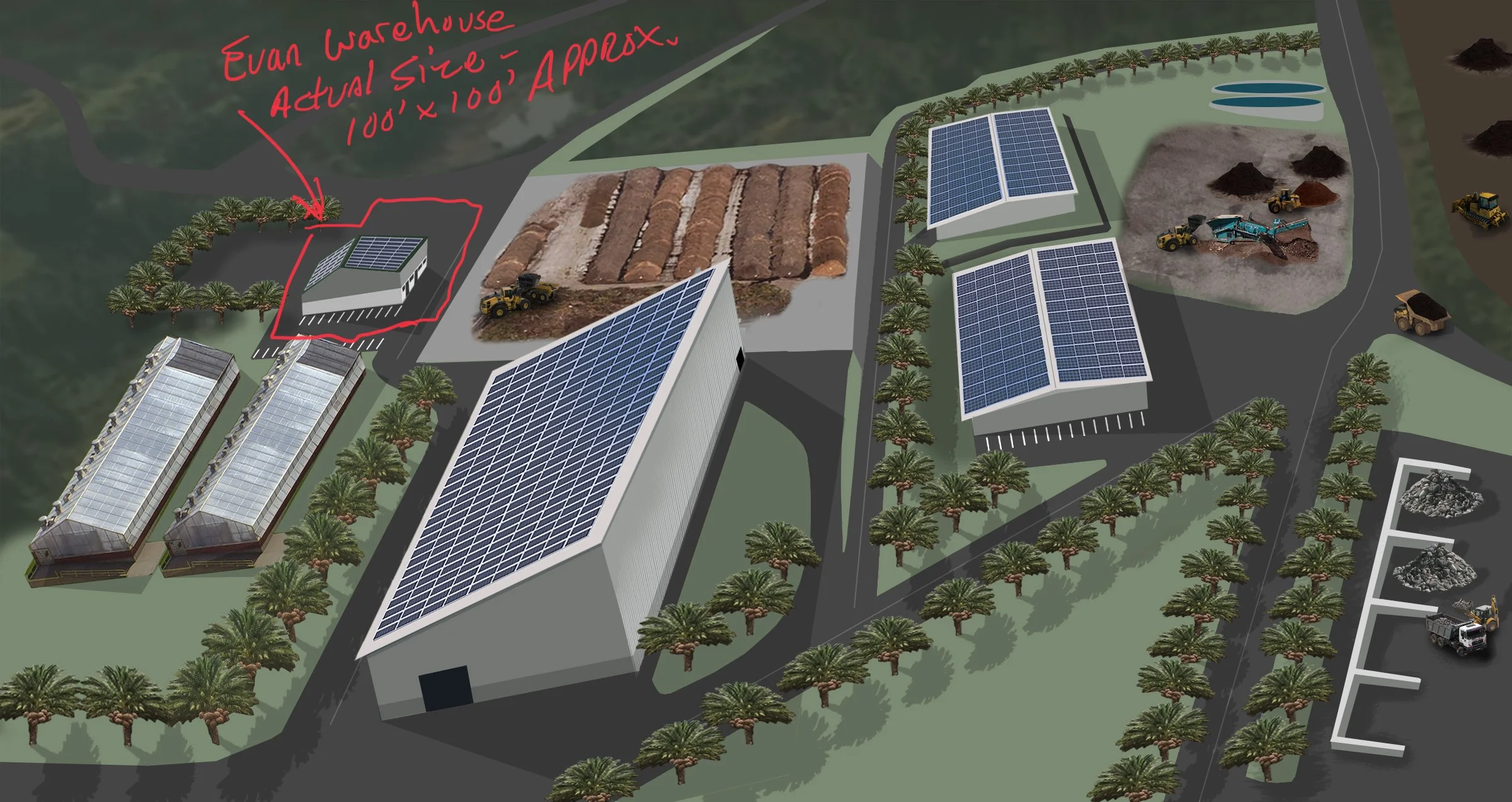
50-acre site plan · compost windrows · solar arrays · greenhouses · the full agricultural & energy park vision
The Current Chapter
The site went to auction after a financial crisis derailed the first phase of development. The valley still holds 1.9 million cubic yards of the richest organic material on the planet. The A-frame still stands — third largest structure in the state — waiting. The pile is still composting. Still between 125 and 151 degrees Fahrenheit. Still alive.
Bobby Grimes is still the man who understands it best — who has done the geotechnical work, the university trials, the EB-5 investment structuring, the county permits and approvals, the meetings with the mayor and county council. Who flew investors in by helicopter from the ocean to see it from above. Who drew the 3D walkdown animation by hand and had it built so the world could see the vision.
The Hamakua Coast gave everything it had to the sugar industry for 140 years. The debt runs deep. The means of repayment is sitting in that valley right now, at 151 degrees, still becoming what it was always going to become.
The soil always comes home.
"The Resurrection of the Hamakua Coast — The Return of the Soil."
Bobby Grimes · HMEP · Haina Mill Earth Products · Honoka'a, Hawai'i